Martial Arts Genre Studies Final Essay
The work: The final written assignment for Cinema and Media Studies (Genre: Martial Arts) at the University of Washington. Explores several films studied throughout the class, paying particular attention to how Paper Tigers (2020) pays reverent tribute to the genre of martial arts films while pushing the genre to an elevated level—all while keeping things fun.
The skill: Analytical, reflective writing/storytelling about film.
While a film like The Chinese Connection, the tale of a martial artist defending his country and deceased master’s legacy, may not sound inherently comedic, it is undeniably fun. There’s a distinct outrageous quality to classic martial arts films which the genre’s fans cherish. Melodramatic romance, exaggerated fight scenes, and banter between enemies add much needed levity to these films which naturally include violence and serious themes. Modern martial arts movies seek to recreate this unique tone, while including specific parallels and diversions to classic martial arts films. In The Paper Tigers, Director Bao Tran adheres to the martial arts film tradition of including comedy in pre-fight banter. Parallels to The Chinese Connection add another layer of fun and nostalgia and diversions from the classic film reflect the struggle of Asian Americans to live up to classic Asian expectations and stereotypes.
In The Paper Tigers, after witnessing three young martial artists create a mockery of their deceased master’s funeral, the Three Tigers go to confront them. While aware of their legacy, these “posers” clearly don’t take them seriously and verbally mock them. This is similar to The Chinese Connection scene where Chen Zhen goes to confront the Japanese martial arts school. Although considering the genre and context of the scenes it is clear that they will end in a fight, both films include long verbal confrontations before things get physical. This is an easy place to add some fun witty banter, and also reflects the tradition of fighting with honor rather than just for the sake of it. These scenes spell out the justification behind the proceeding violence. In both scenes, the antagonists take cheap digs at the protagonists about their appearances, and repeatedly display their lack of respect towards them. In The Chinese Connection, knowing Chen Zhen’s abilities, the audience gets excited knowing that the antagonists will soon eat their words. Chen Zhen also hardly responds, knowing that his martial arts skills will speak for themselves. The Three Tigers try to prove themselves, citing their past accomplishments, likely because they have less confidence in their abilities. This show of insecurity draws a clear difference between the Tigers and Chen Zhen, reflecting The Paper Tigers’ modern take on the martial arts film. It also introduces the more serious themes of a “mid-life crisis” and insecurity in a lighthearted way.
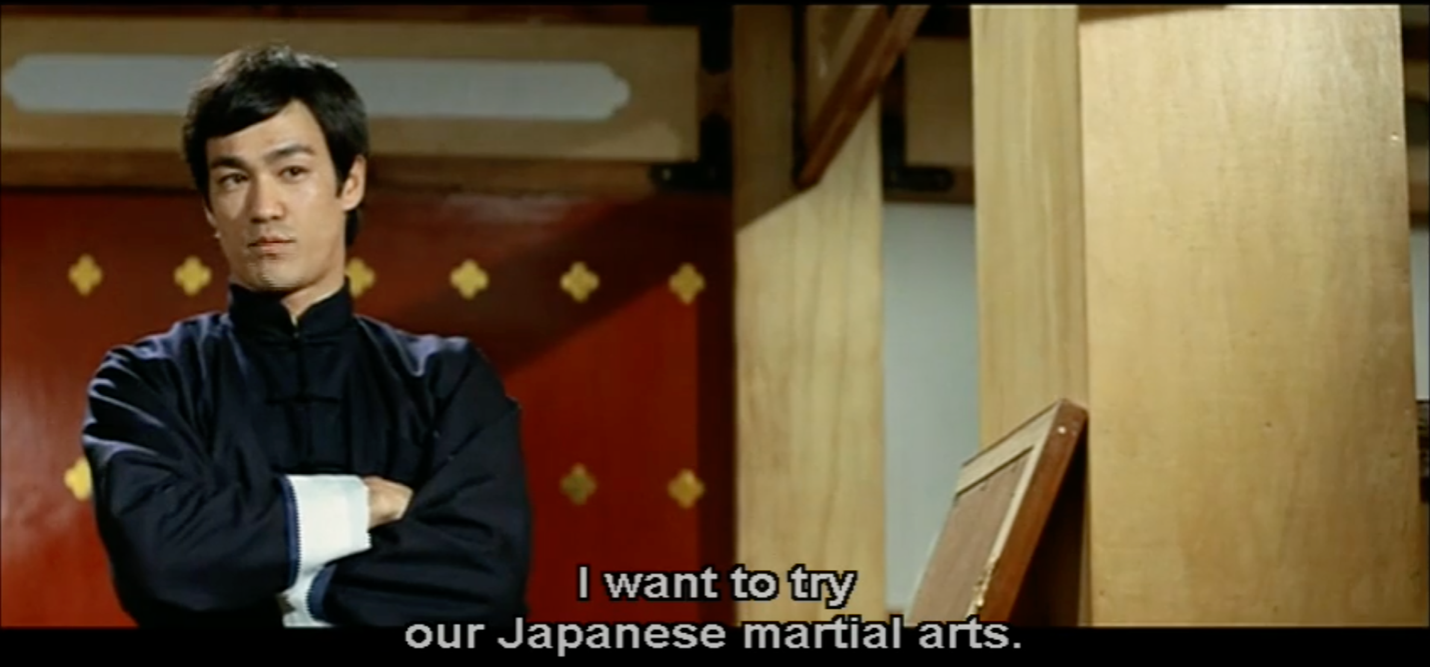
In these scenes, the Paper Tigers and Chen Zhen are both looked down upon and underestimated. However, Chen Zhen fuels this idea, saying he’s the worst student at his school. Conversely, the Three Tigers wish to be taken seriously, but aren’t due to their age and appearance. The composition of these scenes deepens this effect. In the screenshot from 00:16:45 in The Chinese Connection, there is a subtle but noticeable upward angle enhancing the apparent size of Chen Zhen’s figure.
This cleverly reflects the content of the scene as Chen Zhen is underplaying his abilities, but the audience knows his true strength. In The Paper Tigers, the Three Tigers are at the top of the pool, towering over the younger men: reflecting how they should be seen due to their former reputation. The disrespect they receive juxtaposed with their physically dominant position is comical and emphasizes their failure to live up to the legacies of classic martial arts movie protagonists. Beyond the genre, this reflects the struggles of Asian Americans to fit different expectations and stereotypes of being Asian. As Bao Tran discussed in the guest lecture, the feeling of incompetence and in-between-ness of Asian Americans was a theme throughout this film, so drawing the connection to Bruce Lee’s Chen Zhen and showing the visual differences creates an image of these feelings.
This idea is furthered with the figures’ bodies. While Chen Zhen’s words indicate inability, his stance is strong, and his arms are either crossed or on his hips, presenting a powerful silhouette. Conversely the Three Tigers speak words of confidence, but their body language says otherwise. Danny, the strongest according to the Tigers’ claims has his hands in his pockets and his shoulders slouched. Even Danny’s clothes, neutral colors and unstylish, draw a clear disconnect between the words being said and the truth. Further, they show a difference between Danny and Chen Zhen, who dresses in a traditional black Kung Fu uniform that is crisp and displays an image of power. While the distinct difference between the protagonists’ appearance is comical, it also shows the image of an Asian American trying to live up to unrealistic standards.
The use of comedy in both the Chinese Connection and The Paper Tigers reflects the tradition of including comedy to lighten the mood of martial arts films. While both include struggles with identity and defending the honor of one’s master, The Chinese Connection includes issues of nationalism, while The Paper Tigers focuses on the identity struggle of Asian Americans. Through these comedic scenes, both introduce these issues in a comical way to keep things fun and lighthearted. The Paper Tigers adds a layer to this by drawing similarities and differences between classic martial arts heroes like Chen Zhen and the Three Tigers. This continues the tradition of lighthearted comedy in martial arts movies while bringing a modern, distinctly Asian American approach.
The Chinese Connection, 00:16:45